
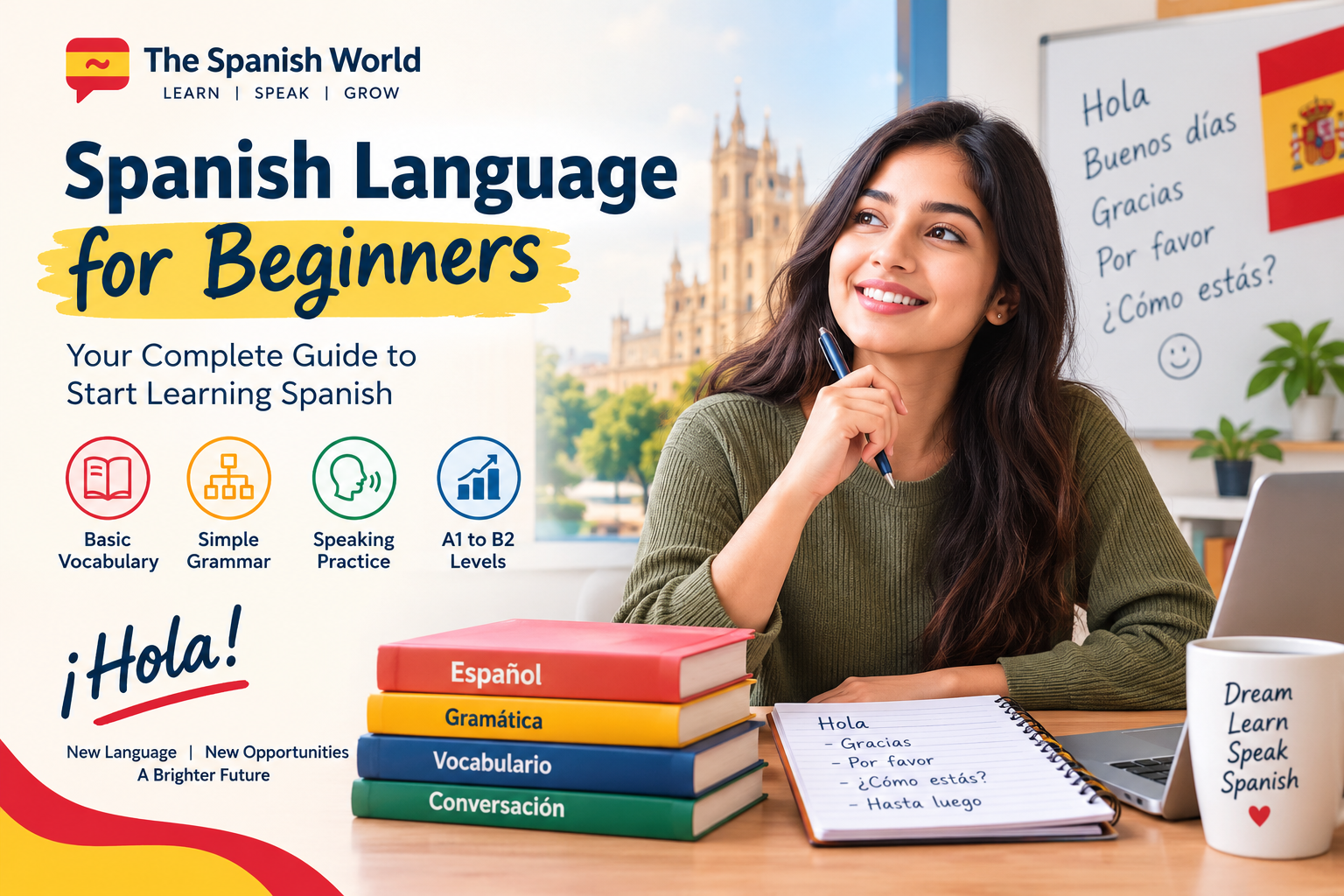
Learning a new language can open doors to new cultures, international opportunities and better communication skills. If you are looking for Spanish language for beginners, Spanish is a great language to start with because it is widely spoken around the world and has growing relevance in education, travel and professional careers.
Whether you are a student, working professional or simply interested in learning a foreign language, starting with the right foundation can make your Spanish learning journey much easier.
In this guide, we will explain how beginners can start learning Spanish, what A1 Spanish covers, how to improve speaking skills and what to look for when choosing a Spanish language course.
What Is Spanish Language for Beginners?
Spanish language for beginners refers to learning Spanish from the basic level without requiring any previous knowledge of the language.
At the beginner level, students generally start with:
- Spanish alphabet and pronunciation
- Basic Spanish vocabulary
- Greetings and introductions
- Numbers, days and months
- Common Spanish phrases
- Basic grammar
- Everyday conversations
- Sentence formation
- Listening and speaking practice
The goal is to build a strong foundation so that learners can gradually move towards higher levels such as A2, B1 and B2.
How to Start Learning Spanish as a Beginner
If you are completely new to Spanish, it is better to follow a structured learning process rather than trying to learn everything at once.
1. Start With Basic Spanish Vocabulary
Begin with commonly used words and expressions related to everyday situations.
For example:
- Hola – Hello
- Gracias – Thank you
- Buenos días – Good morning
- Por favor – Please
- Sí – Yes
- No – No
- ¿Cómo estás? – How are you?
Learning commonly used vocabulary gives beginners a useful starting point for everyday communication.
Read More: Limited Time Offer: Spanish Language Course – ₹5,999/Month | 3 Months ₹14,999
2. Learn Spanish Pronunciation
Pronunciation is an important part of Spanish language learning.
Spanish pronunciation can be easier to understand when beginners learn the sounds of individual letters and practise them regularly. Listening to Spanish conversations and repeating words aloud can also help improve pronunciation and confidence.
3. Understand Basic Spanish Grammar
You do not need to master advanced grammar when you are starting.
A beginner Spanish course usually introduces important concepts such as:
- Personal pronouns
- Gender of nouns
- Singular and plural forms
- Articles
- Basic verbs
- Present tense
- Sentence structure
- Question formation
Understanding these basics helps learners create simple Spanish sentences instead of only memorising individual words.
What Is A1 Spanish?
A1 is generally considered the beginner level of Spanish in the Common European Framework of Reference for Languages (CEFR).
An A1 Spanish course focuses on developing basic communication skills. Learners at this level work towards understanding and using simple Spanish expressions in familiar situations.
A typical A1 Spanish course may cover:
- Self-introduction
- Family and personal information
- Numbers and dates
- Food and shopping
- Directions
- Daily routines
- Basic conversations
- Common vocabulary
- Fundamental grammar
- Simple listening and speaking activities
Once you have developed a strong A1 foundation, you can continue towards A2 and later B1 and B2 depending on your learning goals.
Why Speaking Practice Is Important for Beginners
Many learners spend a lot of time studying vocabulary and grammar but hesitate when it comes to speaking.
Regular speaking practice can help you become more comfortable using Spanish in real situations.
Spanish speaking classes can provide opportunities to:
- Practise everyday conversations
- Improve pronunciation
- Build vocabulary
- Form sentences naturally
- Develop listening skills
- Become more confident while speaking
The more consistently you practise, the easier it becomes to use the language actively.
How Long Does It Take to Learn Spanish?
There is no single time period that applies to every learner.
The time required depends on factors such as:
- Your learning routine
- Previous language-learning experience
- Class frequency
- Amount of speaking practice
- Time spent practising outside class
- Your desired level of Spanish
Someone learning Spanish consistently every week may progress differently from someone who studies only occasionally.
Instead of focusing only on how quickly you can complete a level, focus on developing strong vocabulary, grammar, listening and speaking foundations.
Spanish Language for Beginners: Online or Offline Classes?
Beginners can choose between online and offline learning depending on their schedule and preferred learning style.
Online Spanish Classes
Online learning can be useful for students and working professionals who need flexible schedules.
Benefits can include:
- Flexible learning options
- Learning from home
- Access to online resources
- Convenient class timings
- Regular speaking practice
Offline Spanish Classes
Offline classes provide face-to-face interaction with trainers and other learners.
They can be useful for learners who prefer:
- Classroom interaction
- Direct trainer guidance
- Group activities
- Face-to-face speaking practice
- A structured learning environment
The important factor is not simply whether you choose online or offline learning. Consistent practice and proper guidance are key parts of successful Spanish language learning.
Who Can Learn Spanish?
A beginner Spanish course can be suitable for different types of learners.
Students
Students may learn Spanish as an additional language and develop an international skill that can complement their academic journey.
Working Professionals
Professionals can learn Spanish to add a foreign language skill to their professional profile and prepare for roles where communication with Spanish-speaking clients, customers or teams may be relevant.
Beginners With No Previous Knowledge
You do not necessarily need prior Spanish knowledge to start an A1-level course. Beginner programs are designed to introduce the language step by step.
People Interested in Travel and Culture
Spanish can also help learners communicate during travel and understand Spanish-speaking cultures, media and communities more easily.
How to Choose a Spanish Course for Beginners
Before joining a Spanish language course, consider the following:
Structured Levels
Look for a course that provides a clear progression from A1 to A2, B1 and B2.
Speaking Practice
A good beginner program should provide opportunities to practise speaking rather than focusing only on written exercises.
Experienced Trainers
Trainer guidance can help beginners understand pronunciation, grammar and sentence formation more effectively.
Flexible Batches
Students and working professionals may benefit from flexible online or offline batch options.
Certification
If certification is important for your academic or professional goals, check what certificate or course documentation is provided after completing the relevant level.
Career Guidance
If your goal is professional development, look for training that connects language learning with practical career requirements and provides appropriate placement support.
Spanish Language Learning Tips for Beginners
You can improve your progress by making Spanish part of your regular routine.
Practise Every Day
Even a short daily practice session can help you maintain consistency.
Speak Out Loud
Do not only read Spanish. Repeat words and sentences aloud and practise simple conversations.
Learn Useful Vocabulary
Focus on words and expressions that you are likely to use in everyday situations.
Listen to Spanish
Spanish songs, videos, conversations and beginner-level audio resources can help improve listening familiarity.
Revise Regularly
Regular revision helps you remember vocabulary and grammar more effectively.
Practise With Other Learners
Conversation practice can help you become more comfortable using Spanish in real situations.
Learn Spanish With The Spanish World
If you are looking for Spanish language classes for beginners, The Spanish World offers structured Spanish learning from A1 to B2 levels with online and offline learning options.
Students can develop their Spanish through structured lessons, practical speaking practice and trainer-led sessions.
Course Features
- A1, A2, B1 and B2 levels
- Online and offline classes
- Flexible learning options
- Practical speaking practice
- Certificate and marksheet
- Career-focused training
- Placement support
The institute is located in Sehatpur, Faridabad and also provides learning options for students and working professionals across Delhi NCR.
Interested in learning Spanish?
Check the latest course details, batches and location information through the The Spanish World Google Business Profile.
[https://share.google/Na304ThVtQWqj4ofu]
You can also contact The Spanish World to learn more about the available Spanish language courses and current batches.
Frequently Asked Questions About Spanish Language for Beginners
Can I learn Spanish if I have no previous knowledge?
Yes. Beginner-level Spanish courses are designed to introduce learners to basic vocabulary, pronunciation, grammar and communication step by step.
What is the first level of Spanish?
A1 is generally considered the beginner level in the CEFR framework. It focuses on basic communication and familiar everyday situations.
Is Spanish difficult for beginners?
Spanish can be learned progressively with regular practice. Pronunciation, vocabulary, grammar, listening and speaking should be developed together rather than studied separately.
How can I improve my Spanish speaking skills?
Regular conversation practice, listening exercises, pronunciation practice and speaking with trainers or other learners can help develop confidence.
Should I learn Spanish online or offline?
Both options can work. Your choice can depend on your schedule, preferred learning environment and access to regular speaking practice.
Where can I learn Spanish in Faridabad?
Learners looking for Spanish classes in Faridabad can explore local Spanish language institutes and compare course levels, trainers, schedules, learning modes and course features before enrolling.
Start Your Spanish Learning Journey
Learning Spanish is a gradual process. Starting with the fundamentals, practising consistently and following a structured learning path can help you build a strong foundation.
Whether your goal is communication, personal development, travel or adding a foreign language skill to your professional profile, starting with a beginner-level Spanish course can be the first step.
Ready to start learning Spanish? Explore The Spanish World and find the right Spanish course for your learning goals.


